Staffing
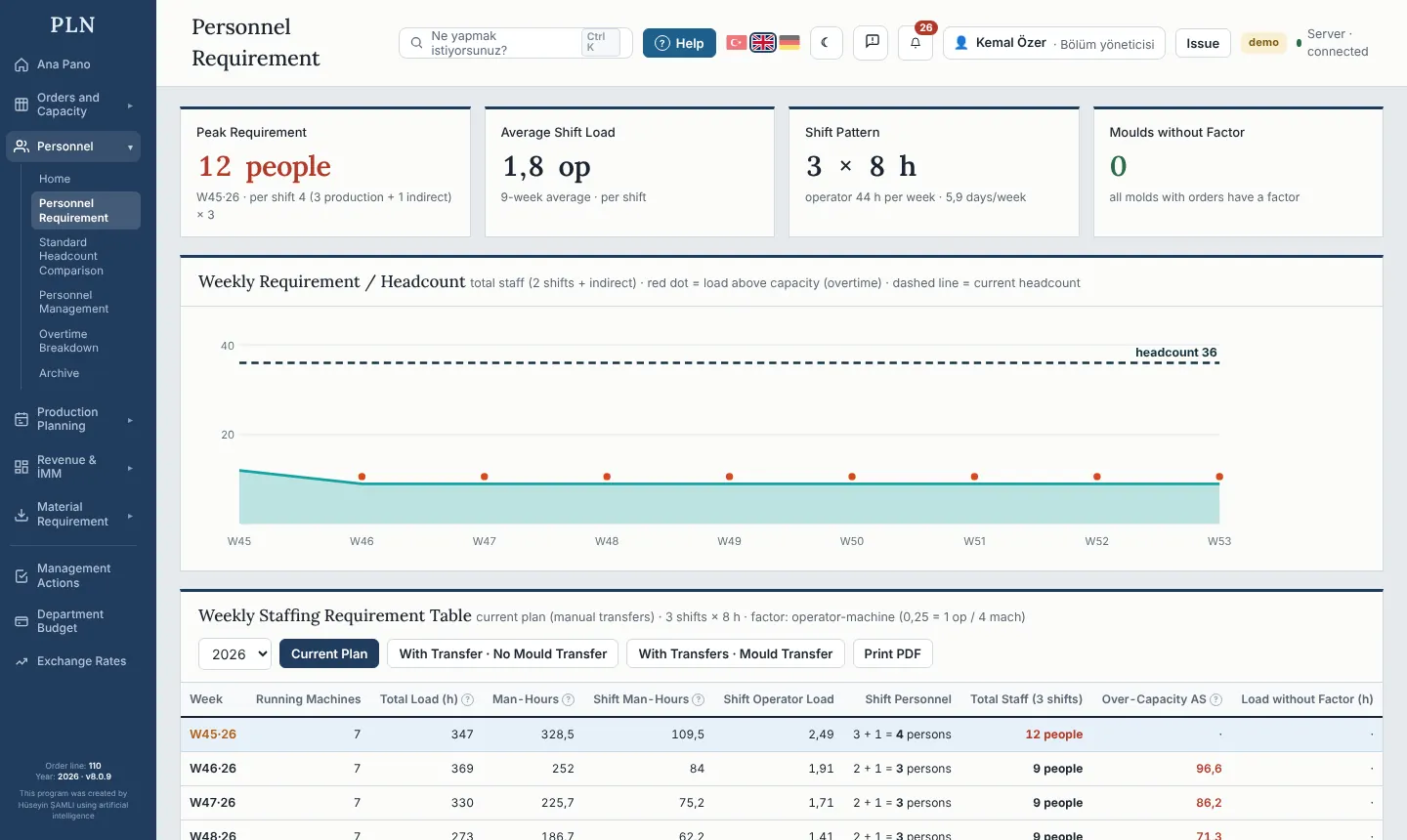
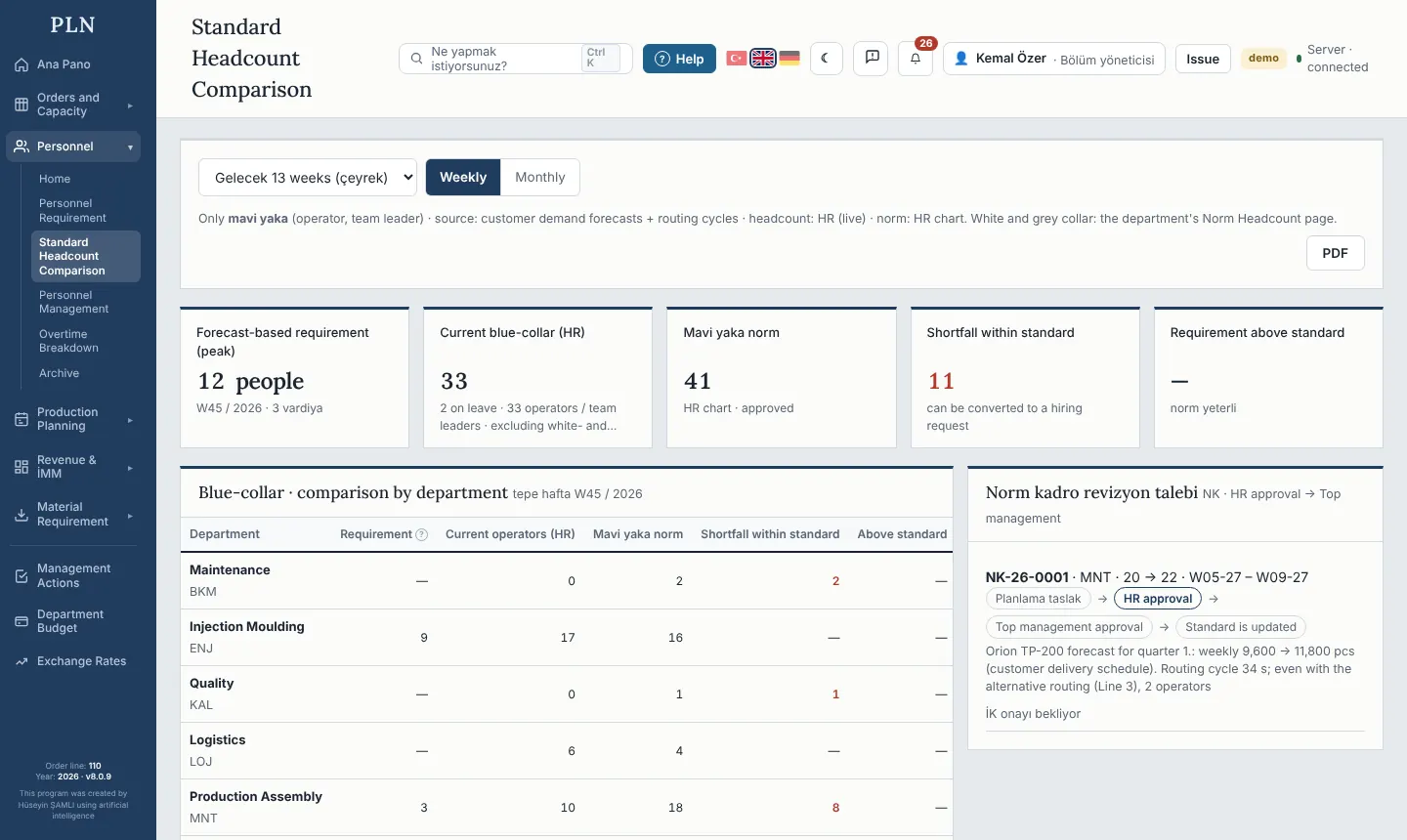
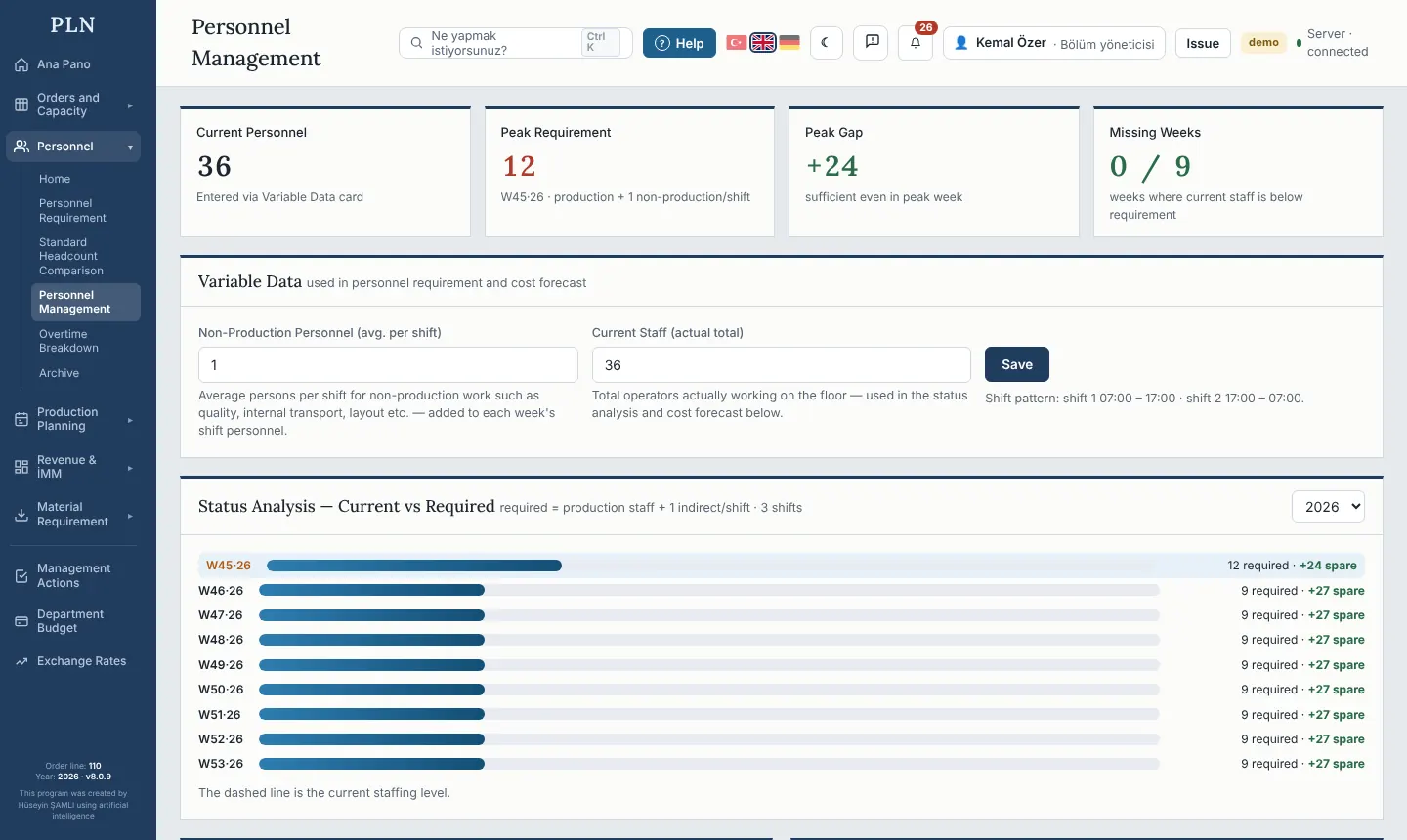
The manning factor per mould (0.25 = one operator tends four machines) is multiplied by machine load to give weekly man-hours and people per shift. The requirement is compared by department with actual and target headcount in HR. If there is a gap, a hiring action is opened for HR; if the target headcount is not enough, a target headcount revision request is opened.
From load to headcount decision
The target headcount comparison covers blue-collar staff only (operators and team leaders).
Main screens of the section
Document outputs
A4 landscape PDF · running machines, total load, man-hours, shifts and total staff per week
Links to other sections and modules
- HRActual and target headcount are read from HR; hiring actions and revision approvals go to HR
- HR (PDKS time and attendance)Approved overtime records arrive weekly in the FM Overtime Report
- Top ManagementFinal approval of the target headcount revision request
- 01 Orders and CapacityMachine load is the input to the requirement
Guides, templates and features
Frequently asked questions
What is the manning factor?
It is the ratio of operators working on a machine: 0.25 means one operator tends four machines, 1 means one operator per machine, 2 means two operators. Moulds without a factor are listed separately.
Who approves a target headcount request?
Planning opens a draft and sends it to HR for approval; after HR approval, Top Management approves. Once approved, the target headcount in HR is updated; the request can be rejected at any step.
Where does overtime data come from?
With a server connection, approved overtime records in HR are read weekly for production departments; operators and indirect staff are kept separate. Weekend overtime can also be entered manually.
Is there a step you find missing? Write anonymously; leave an e-mail if you would like a reply.
Give feedback